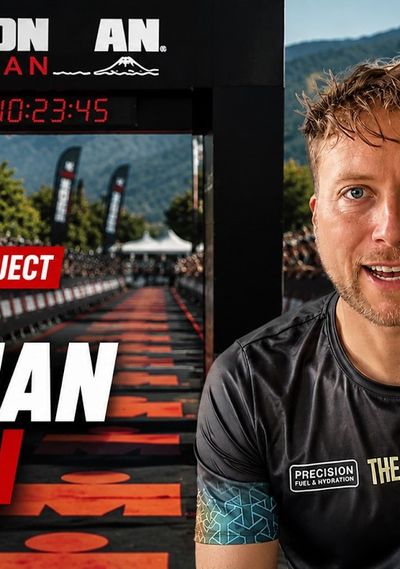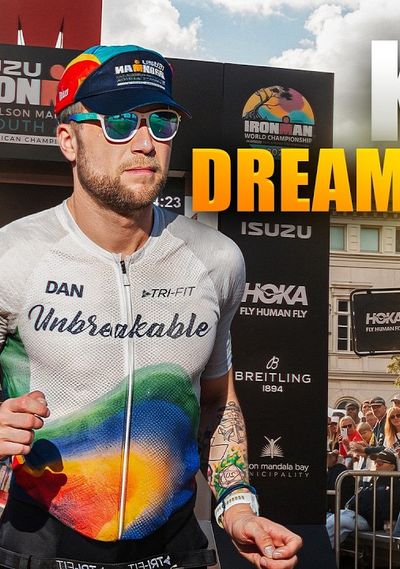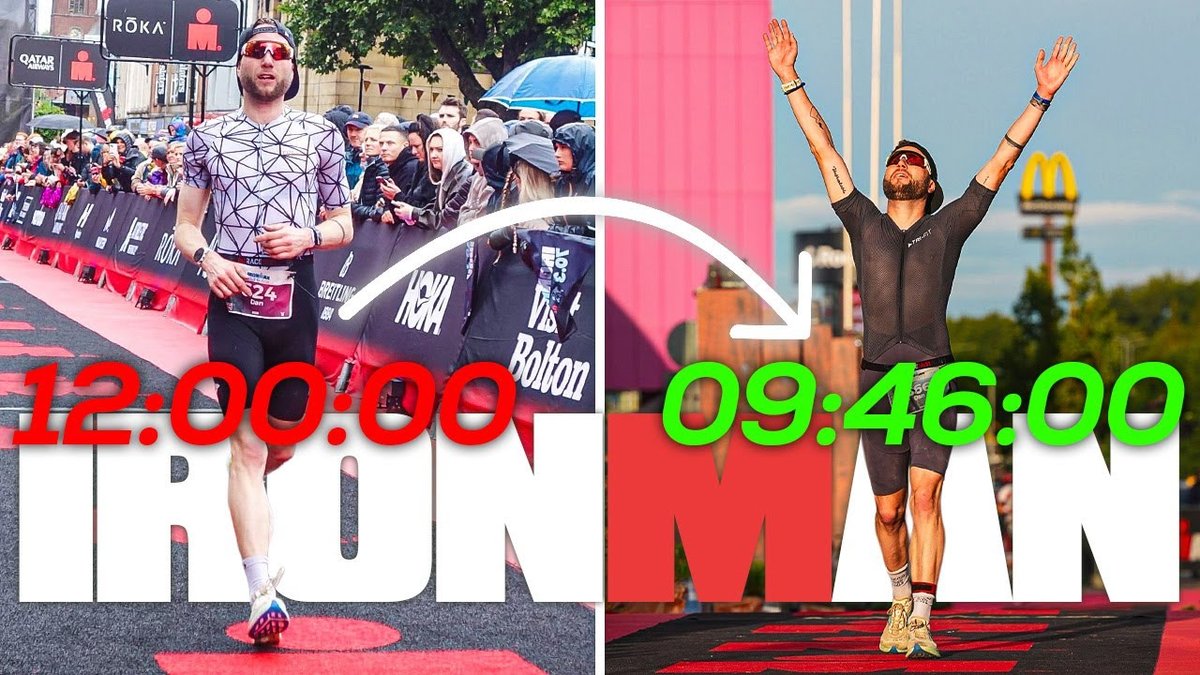
9 hours 46. Eight months ago I was a beginner swimmer and a mid-pack rider with a personal best of 12:14 from Frankfurt. This wasn't the race that qualifies anyone for Kona - that was never the point of it - but it's the clearest evidence yet of what eight months of actual structure does.
How it felt
Genuinely comfortable all day, which has never happened to me in a full-distance race before. I felt like I could have given a bit more at the end rather than having nothing left, and that alone tells me more than the time does.
If I had to pick one thing that made the biggest difference, it's the new bike. Getting it properly fitted and then actually spending real hours on it in position - long TT sessions just getting comfortable in that aero position - changed how the whole ride felt. Smooth the entire way, in a way the old bike never let me be.
The swim and the bike
Flat, calm bay, two loops with an Australian exit back onto the same pontoon rather than one long continuous swim, which made pacing a lot easier. Seeded myself around the 1:08-1:10 group, hung onto a few packs, and actually leapfrogged forward through a couple more as the swim went on. Felt strong the whole way.
180km, sliced up by power rather than just riding on feel - easing into headwind sections, letting tailwinds carry a bit more. Flat course, so no real surges, which showed up in the file afterward as a genuinely smooth, controlled ride. Long stretches - ten, twenty minutes at a time - properly aero, something the course and the new position both made possible in a way hillier courses never do.
The run
This is the part I'm proudest of. Flat, twisty, a short unhelpful stretch of sand, a bit of headwind, good crowd support - and I ran a 3:15 marathon off the bike. Second-fastest marathon I've ever run, including standalone fresh-legs ones. The plan going in was deliberately conservative for the first 10km, no matter how good I felt, because that's exactly where people who've overbiked start finding out about it. I held back, felt strong at halfway, and from there it was just reeling people in. Heart rate barely moved the whole way - no real dip, no real surge, which apparently almost never happens.
The fuelling
Carb-loaded properly in the days before for the first time in a race like this - easy food, plain pasta and rice, Chiara making sure I actually ate enough of it rather than just intending to. On the bike I pushed carbs higher than planned, up around the 90-100g/hour mark instead of staying conservative, since my stomach was completely fine with it. About 2.5 litres of drink mix split between my bottles and top tube. All of that circulated through into the run - what you absorb on the bike keeps feeding you for roughly two hours afterward, which is exactly why the pacing on the bike matters as much as the fuelling itself.
Eight months, in context
This started as a seed of an idea in January: full physiological testing, a complete DNA gut map, blood panels, strength and movement screening, a physio with Olympic-level experience, and then just showing up, day after day, for eight months. I'm not the most naturally structured person, but I turned up for the sessions, had fun along the way, and didn't miss much beyond feeling a bit rough here and there - which is just life with a full-time job and everything else that comes with being an amateur doing this.
The biggest single lever for the result itself: the bike, by a distance. Threshold power started at 220W back in February; by Tallinn I was sustaining 190W for the entire Ironman bike leg at a 5:06 split - not huge numbers, but genuinely efficient, durable, and nowhere near maximal. There's still real room to raise that ceiling. The run backs up what the testing always suggested - a decent low-end engine that strength work, hill running, and a lot of unglamorous gym and breathing exercises have been quietly building since February.
What's next
Winter's about the swim catch, since that's still the biggest technical gap, and more time raising the bike ceiling rather than just adding volume. A marathon in Amsterdam on fresh legs in October first, a couple of early-season running races to stay sharp, and an Ironman planned for April 2026, still to be confirmed - one more step on what's realistically an 18-month to 3-year road to the start line in Kona, not a single race away from it.