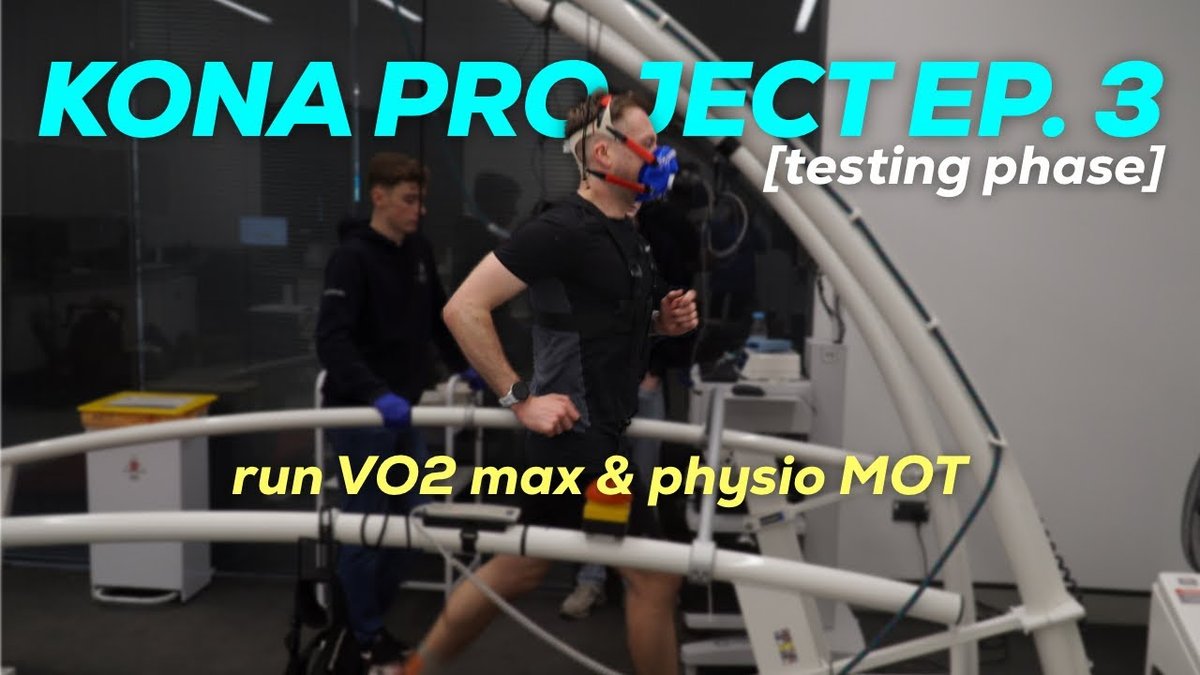
The last bit of winter testing: a run VO2 max test at Leeds Beckett University with a physiologist, then straight across to a physio clinic that's worked with half the GB triathlon and athletics scene.
The run test
Two parts, same idea as the bike test a few weeks earlier. First a sub-max stage on the treadmill - easy at 8-9km/h, up 1km/h every three minutes, blood lactate and a gas mask running the whole time, even blood glucose this time, which was new. The point was finding LT1 (where I tip from purely aerobic into working harder) and then LT2, just past 4mmol of blood lactate, where the test stopped.
After a 10-minute rest, part two: a ramp test to failure, incline going up 1% a minute from a fixed speed just below my threshold. Nine stages, properly uncomfortable by the end. I came out with a VO2 max of 52ml/kg/min - higher than my bike number, which is apparently fairly normal - and a max heart rate of 184. I was still improving right up to the point I couldn't anymore, which Andy was pleased about given I haven't done any real top-end running in months. The interview straight after wasn't eloquent - "hard work... can't even talk" was about the extent of it.
What it actually means
My LT1 sits around 11km/h, LT2 not far past that, with a VO2 max ceiling around 14km/h. For an elite marathoner those two thresholds sit much closer to their ceiling - everything bunched up near the top. Mine are spread out, which means the lever isn't really LT1, it's the same story as the bike: raise the ceiling and the rest follows. My fat-max pace is lower still, around 9km/h, so there's real room there too. Running economy came out at 219 (the cost of oxygen per kilometre) against a target closer to 204 - something LT1 volume and some strength and plyometric work should chip away at.
Current baseline is a 21-minute 5km, four marathons and four Ironmans already done - so none of this is about being new to running, it's about fixing things that were never looked at before.
The physio side
An hour later, a full top-to-toe assessment at The Coach House, a clinic that's worked with the Brownlee brothers, Jessica Ennis, Kelly Holmes, and Emile Cairess, who finished fourth in the marathon at the Paris Olympics. Not because anything's injured - just a proper baseline to go with the strength and conditioning work from the week before.
The easy wins: breathing and rib flaring, and instability standing on one leg. The bigger one is flexibility, and apparently fixable in a few weeks with the right targeted mobility work for how my specific joints sit - everyone's hip sockets are slightly different, so a generic stretch isn't the same prescription for everyone. Ankle mobility and, oddly specifically, my big toe joint both came up. Thoracic posture too - years at a desk have left my upper back curved and my neck forward, which was apparently obvious within minutes of meeting me.
The homework: calf raises, bent and straight leg, aiming for quality over just grinding out reps, plus shoulder, core, and hip strength work. Simple stuff, but apparently the kind of thing that's been missing the whole time.
Where it leaves things
That's the winter testing block done. Six to eight weeks of aerobic base building next, no more lab work for now - just pace and heart rate correlation, a 5km parkrun, and a short flat-out effort to track progress in the field instead. Then head down, maybe another camp, and a couple of races on the calendar.